
SigaME
SigaME Flow: coordinates operations
Flow turns operational requests into traceable tasks: from a two-tap request to completion, with fair dispatch, acceptance on the eCom or a phone, and measured times, queues and SLAs.
Who it is for and when to use it
Built for porters, internal transport, cleaning, housekeeping, logistics, care support, and support for the operating room and the emergency department.
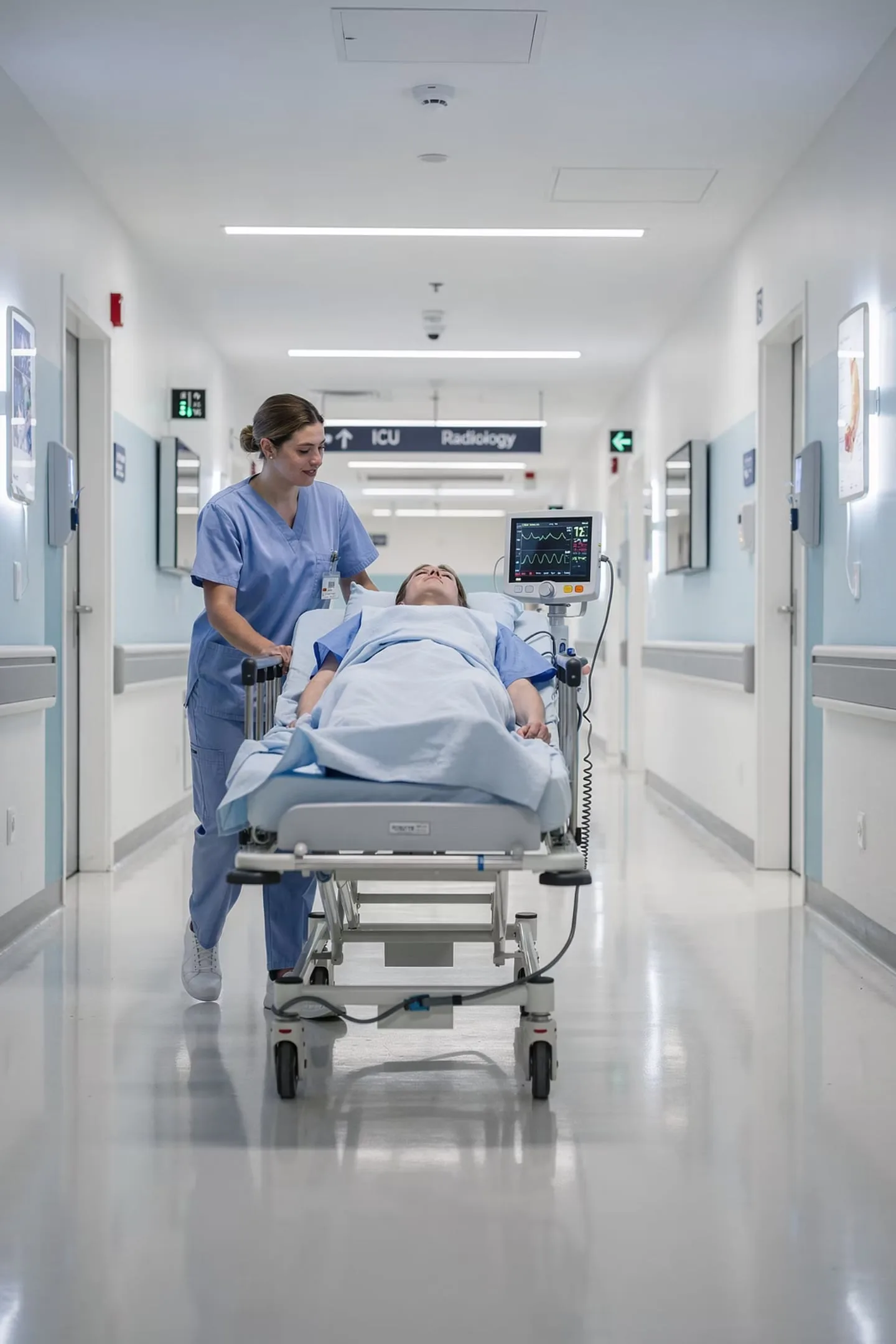
Patient transport deserves special attention: delays there affect exams, surgeries, discharges, transfers and bed turnover.
How it works day to day
Two-tap request
Nursing picks a unit favorite or a shortcut, adds the record number if they wish, and sends. Origin, destination and notes, such as isolation, oxygen or stretcher, are a tap away.
Fair, automatic dispatch
The task is offered to whoever is available, considering proximity (with RTLS), workload and waiting order, like a taxi queue. The coordinator can assign or reassign manually.
Execution on the eCom or a phone
The professional receives the task with sound and vibration and accepts, declines or completes it with the buttons. Every step is logged with a timestamp.
Follow-up by the requester
"The porter accepted" and "arrives in about 5 min" show up for whoever asked, with no phone call.
Automatic arrival and cleaning
With RTLS, arrival at the location is marked on its own. For room cleaning, the task becomes "In cleaning" when the professional arrives and is completed when they leave.
Call points
A fixed wall device creates the task with the badge and a button held for 5 seconds, already with the right location.
Automatic tasks
Patient discharge triggers terminal cleaning, equipment left in the soiled room triggers sanitizing, and a unit below its minimum triggers restocking.
Management
A coordinator board showing SLAs at risk first, TV mode, managers per team, messages with read receipts, and CSV and PDF reports.
In the operating room and the emergency department
Flow coordinates support activities. It does not replace surgical systems or clinical protocols.
Take the patient to the operating room
Calls the porter and tracks acceptance, travel, arrival and completion, for a more predictable schedule.
Clean and prepare the room
Creates the cleaning task and, with RTLS, measures its start and end by the professional's presence: room turnover measured automatically.
Fetch supplies or equipment
Calls the support team and tracks delivery, with fewer interruptions and phone calls.
Transport a patient to an exam
Calls transport and shows its status, with less waiting and less load on nursing.
Free up a bay or room
Calls cleaning and records completion, so spaces are available sooner.
Support discharge or transfer
Organizes exit tasks, including automatic terminal cleaning.
Works well with
- SigaME RTLS
RTLS provides the information and Flow turns it into action: dispatch to the nearest professional and arrival marked automatically.
- SigaME TRR
Flow coordinates day-to-day tasks. Critical clinical responses, such as a cardiac arrest, belong to TRR.
- SigaME Journey
Room turnover measured by Flow feeds the room turnaround report in Journey.
Want to see Flow at your hospital?
Let us work out together which operational flow brings the greatest impact to your institution.